

Discipleship – A Crisis in Identity

– By Jonathan Michalski

                People are an interesting study. There’s much insight we can gain from observing people’s behavior. Perhaps though the person we neglect to study most carefully is ourselves. Not that we are not often thinking of ourselves. We are always thinking of ourselves. But when we are observing others, we can easily highlight areas in them to criticize, while being totally ignorant or delusional about our own weaknesses. We all form opinions of ourselves. These opinions shaped by family, friends, society, and our own egos, give us an identity in the world. High school yearbooks have categories for identifying people. There is “most likely to succeed,” “most likely to run for mayor,” “athlete,” “artist” etc. There are also negative statements identifying us that we seek to be rid of. As we age, our method of self-identification becomes more and more engrained in us. This is made so much apparent by how hard we work to maintain the identifying features we are happy that people know us for. Celebrities who are known for their beauty struggle hard against the work time does on our physical appearance. Athletes who are known for being the best in their discipline chafe against the new generation of talent that gradually takes over their pedestal. A man in his 50s buys a sports car and is diagnosed as having a mid-life crisis. A description of someone seeking to hold on to their youth. How do these features factor into a Christian’s walk with Jesus?

Jesus’ call to follow him is not to be taken lightly. There are so many poor presentations of Christ resulting from improper theology. But if we go straight to the source (the Bible) of how Jesus called people to him, we can see clearly what Jesus meant by the call to follow him. Luke 14 – 26If anyone comes to me and does not hate his own father and mother and wife and children and brothers and sisters, yes, and even his own life, he cannot be my disciple. 27 Whoever does not bear his own cross and come after me cannot be my disciple. 28 For which of you, desiring to build a tower, does not first sit down and count the cost, whether he has enough to complete it? 29 Otherwise, when he has laid a foundation and is not able to finish, all who see it begin to mock him, 30 saying, ‘This man began to build and was not able to finish.”

This is not the only place Jesus told people to consider carefully what it meant to follow him, before committing to follow him. In Luke 9 it says – 57 As they were going along the road, someone said to him, “I will follow you wherever you go.” 58 And Jesus said to him, “Foxes have holes, and birds of the air have nests, but the Son of Man has nowhere to lay his head.” 59 To another he said, “Follow me.” But he said, “Lord, let me first go and bury my father.” 60 And Jesus[g] said to him, “Leave the dead to bury their own dead. But as for you, go and proclaim the kingdom of God.” 61 Yet another said, “I will follow you, Lord, but let me first say farewell to those at my home.” 62 Jesus said to him, “No one who puts his hand to the plow and looks back is fit for the kingdom of God.”

I think the Apostle Paul gives the best explanation succinctly on what it means to follow Jesus with his statement in Galatians 2 – 20 I have been crucified with Christ. It is no longer I who live, but Christ who lives in me. And the life I now live in the flesh I live by faith in the Son of God, who loved me and gave himself for me. Being a disciple of Jesus means your old identity will die and in its place Jesus’ identity will rise. This is where the tension of self-identification and true discipleship comes to play for a Christian. Which identifying features of yourself do you value most? If Jesus puts these features to death, will it be worth it to you to follow him and lose yourself? I find in being a pastor and leading people and having the unique opportunity to dialogue with two very different cultures between Uganda and America, the universal challenge with discipleship is the tension of boundaries we wish to maintain on how Christ-like we become. A young friend of mine just asked me for advice saying neighbors have been stealing bananas from his mother’s matooke plantation, so they started treating the neighbors coldly and the neighbors quit stealing. But my friend’s heart was convicted that as Christians that wasn’t how they should handle the situation. We discussed scripture. The challenging question holding us back from obedience? What if God’s way leads to my possessions being taken away?

The way Jesus dissuaded people from following him was by showing that there were no conditional clauses in the contract of discipleship. We can not say Lord I will follow you anywhere except there. Or Lord, I will give you 20% of my income if you give me a salary of 100K per year. There’s no greater example of a conditional proposition of discipleship than what Jacob said to God the first time God spoke to him. Genesis 28 – 20 Then Jacob made a vow, saying, “If God will be with me and will keep me in this way that I go, and will give me bread to eat and clothing to wear, 21 so that I come again to my father’s house in peace, then the Lord shall be my God, 22 and this stone, which I have set up for a pillar, shall be God’s house. And of all that you give me I will give a full tenth to you.” God had just promised Jacob what he was going to do with him and his offspring, but Jacob responded with many IF clauses to his agreement to follow God. To put in a missionary context, it would be like me saying God I will go preach the gospel so long as I have plenty of food, clothes, a nice house, running water, electricity, and handy transportation.

When Jesus came on the scene of public ministry, he followed closely on the footsteps of John the Baptist. John was a renown public figure that the people generally regarded as a great prophet. But when Jesus appeared, the followers of John became jealous that people were no longer coming to them and were now going to Jesus. John’s reply gives a great truth to meditate on in our walk with Christ. John 3 – 27 John answered, “A person cannot receive even one thing unless it is given him from heaven. 28 You yourselves bear me witness, that I said, ‘I am not the Christ, but I have been sent before him.’ 29 The one who has the bride is the bridegroom. The friend of the bridegroom, who stands and hears him, rejoices greatly at the bridegroom’s voice. Therefore this joy of mine is now complete. 30 He must increase, but I must decrease.”

Following Jesus means our identity will decrease and his will increase. This is not easy. When the Bible speaks of putting our former self to death, it speaks literally about the death of how we used to view ourselves. Everything is hidden in Christ. I’ve been going through this tension in a new way for the past almost two years with spinal surgeries and loss of ability and function in my body. I had a friend at a former workplace who used to say that if there was something that weighed less than 400lbs, we just let halski move it himself. My dad used to joke that we Polish are not very bright but can make things work by might. Now, even my 4-year-old and wife rebuke me for lifting things. It’s been revealing to see my own revolt against God’s stripping away of identifying features of myself that I didn’t know were so important to me until God took them away. A few months ago, awake in the night with pain, I asked God in desperation when he was going to give me back my life. It was a moment of prayer where you voice your complaint and then are overwhelmed by the folly of how you’ve been looking at things. Would we really rather have our former identity back than have the life Christ gives us? But herein lies the problem of discipleship, it is a crisis in identity. It must be Christ who lives through us. It must be Christ who acts in us. It must be Christ that people perceive on us. Whatever traits of mine are not part of his identity must be let go of. This is what it means to follow Jesus.

The 9-year-old boy who taught me how to suffer –

Reagan Lukyamuzi came to Eagles Wings in the beginning of 2017. He was severely malnourished and suffering from a variety of health issues, the greatest being stage 4 abdominal and liver cancer. Under the care of our founders, Bill and Ann Peckham, Reagan quickly gained strength and showed an amazing ability to pick up the English language. After about 6 months he was mostly conversant in it. Reagan had a way of winning everyone’s hearts who met him. The first thing I would say most people noticed about him, perhaps even more so than the tumor that caused his stomach to stick out as if it contained a soccer ball, was his smile. Reagan’s smile made other people smile.

Reagan underwent a year of chemotherapy treatment to reverse his cancer. The doctors only gave him 6 weeks to live when they first saw him, but he survived a year and a half beyond that. But slowly and very painfully, the cancer took away Reagan’s life. He died on October 18th, 2018. The last couple months of his life were the most challenging experience I’ve had in ministry. He was on morphine around the clock to manage his pain. Because of the size of his tumors and their location, Reagan could only be in a sideways sitting position on the sofa. We put pillows around him, and we could only lean him towards his left shoulder or his right shoulder with no other position comfortable for him. He developed bed sores that made the bottom of his legs unrecognizable as a person’s to me. He had a catheter for urination those last two months and the only way he could have a bowel movement was for a few of us to dangle him off the edge of a sofa over a bucket.

One of the most amazing traits about Reagan was his thoughtfulness for others in the midst of his suffering. Whenever he was going to be assisted to have a bowel movement, he would ask us to put on the fan in his room because he feared the smell would bother us. He would study your face as you helped him checking to see whether it was an inconvenience to you to have to care for him. One day when he first entered his steep decline towards death, he had an attack that prompted us to take him to the clinic. At that time, he was most comfortable to be carried by one person supporting him from the middle of his body. Since I was the only person big enough to carry him like that, I took him to the clinic and spent the day with him there. It was Monday and every Monday at our office we eat posho and beans. Reagan knew this was my favorite meal of the week and so, when some of our other caregivers came to cover me so I could take care of some work, Reagan insisted they bring posho and beans for both of us, as we had not had any food the whole day. Reagan then waited for me to return to the clinic before he would begin eating. On another occasion, I took a shift staying in his room with him. He was awake through most of the night, so we had multiple staff and students take turns being on this duty. His main caregiver at this time was a young lady named Amelie Beckstein, who had become like his mom. In the morning, Reagan asked me if I planned to stay with him again that night. I told him I would stay with him every night if he wanted me too, but he said no, I think Aunt Alannah and Holden (my wife and son) will be missing you. That statement by Reagan really summarizes his character. He always thought of others even when he was in great pain.

In those last months, the most painful thing for us was to watch Reagan suffer. I would read the Bible and pray with him every morning and most evenings. He had become so versed in English by this time that he was well able to follow even large words. If he didn’t recognize one, he would ask me to stop and explain before we continued. His pain became so difficult that he would regularly ask us to kill him. He believed in Jesus. He was confident where he was going when he died, and he was so worn out from a terrible fight. I would answer him that I couldn’t do it and that our lives are all in God’s hands. But then I would withdraw to my office and I would weep asking Jesus why he couldn’t just take Reagan home. I would ask, “why must he keep suffering Lord?”

In September of 2019, I sustained a badly ruptured disk and another that bulged out of place while I was home visiting family in the United States. My family and I did quite a bit of driving visiting people and then we flew back to Uganda in November. This was probably just about the worst possible circumstances for dealing with the nerve compression I had from the disk rupture. The pain became so bad that I could barely walk and most nights I could not sleep. A colleague of ours took me for an MRI and that’s where my injury was first realized. I visited an orthopedic specialist who advised I must have surgery to correct the issue. I had tried chiropractic and physiotherapeutic methods, but they could not deal with the disk that had fallen out of place and was laying on top of my nerves. I went for what was supposed to be a simple spinal procedure in May, but it became anything but simple. I have had lower back problems since I was a boy. My dad always blamed himself for it for an incident where he dropped me when we were playing. The reality was that spina bifida runs in my family and I was born with it. It caused my spinal cord to become tethered to my spinal wall. In the surgeon’s attempt to get at my disk, my spinal cord was detached from the spinal wall and that brought on a flood of spinal fluid and led to a later emergency procedure performed by a neurosurgeon. The surgeries left me with little to no urinary and bowel control, almost complete numbness below my waist, and a lack of other physiological function and muscle control. It has been about 5 months from my second procedure. Many of my symptoms have improved, but I have new nerve pain that is every bit as excruciating and debilitating as that which I originally went in for surgery to resolve. The COVID lockdown period was actually beneficial for me since it allowed me to have rest away from work. But now months have passed, and life and ministry must continue.

As I sat in the lobby waiting to be admitted for my first surgery, I was reading Psalms 119. For the past few years, I’ve been asking God to grow my love for people. I find the greatest handicap in the Christian life to be a lack of God’s love in our hearts. This is the root cause for any genuine concern over another person’s eternal destiny. I have gone through the motions. I have had the opportunity to preach to tens of thousands of individuals in Uganda, but many times I’ve been disconcerted that without more love I will never be more like Christ. As I was reading Psalms 119, my eyes fell on verse 32 – “I will run in the way of your commandments when you enlarge my heart!”

The words resounded with the growth I’d wanted myself. I can only be more obedient after God enlarges my small heart. So, I prayed and asked God to give me that. I knew that in the surgical process, the temptation would be to simply focus on myself. But I wanted to reach out to my surgical team and nurses with the gospel. I know that many times when life is difficult, I become less likely to reach out to those around me. Do you know how God enlarged my heart? By allowing me to go through pain without end. I’m now in pain all the time. I can either minister and be in pain or not minister and still be in pain. Most of the time it is all I can do to keep a straight face having a conversation with someone at work. Sometimes I retreat to my office and lay on the floor. I’m on my own painkillers round the clock. Do you know who I have thought of many times? The little boy who suffered more than I have and yet who still loved the people around him. And I remember how many times I asked God why Reagan had to suffer. I had no idea that God was using him to deal with my own problem of having too small of a heart to really love people like Jesus does.

I look forward every day that I think of Reagan to seeing him again in heaven and telling him how God used him to help his Uncle Jonathan overcome the handicap of a small and selfish heart.

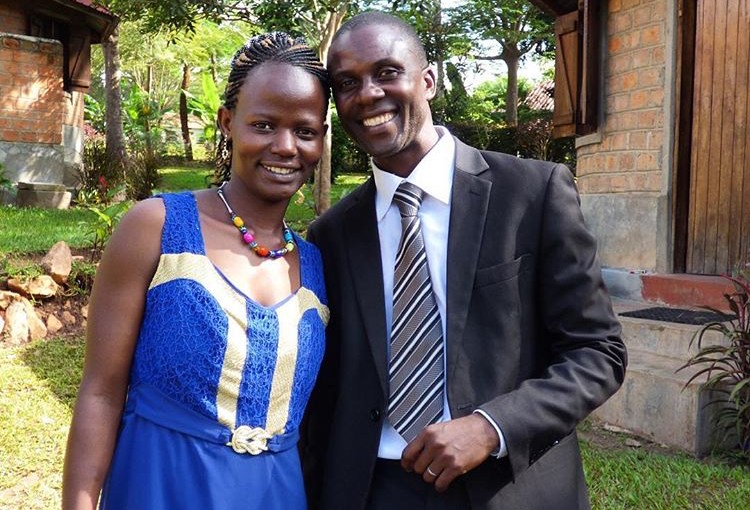
Pastor Allan Kisakye’s Story

By Allan Kisakye –

The father to the fatherless, the defender of widows is God in His holy dwelling.  God sets the lonely in families, He leads out the prisoners to prosperity, but the rebellious live in a sun scotched land. 

 When I was four months old my mother abandoned me because she had separated from my Dad. My grandma raised me. She was an aged widow already with 13 children of her own. She would dig in people’s yards to earn a living.  When I was six, my father came and took me to stay with my stepmother. While with her, I was verbally, emotionally, and physically abused to the point that my Aunt Serena, fearing for my life, acted as a child trafficker and stole me from my stepmother one night. We walked for nearly 30km to my grandmother’s. My aunt risker her life by walking home that same night.  

When I was about 9, my grandmother was unable to support me in school. I innovatively started rummaging through several garbage piles to find useful articles to use at home, especially food and charcoal for fuel. During these years, I became a part-time street boy and while on the streets, life served me with several hard knocks, some of which were life threatening.  At home sleeping on an empty stomach was normal. We got used to it and for years we ate one meal per day, if we got even that. I was always a sickly boy due to malnourishment, but herbs were my usual medication. I first received proper treatment from a Doctor at the age of 13 through a good Samaritan and shortly after that I was privileged to wear my first shoes. 

Through it all, God was pursuing my heart, and the more I turned away from Him, the more I struggled with life. Till when I became too ill, confused, and depressed to the point that I contemplated ending my life, but failed to find the rightful means of doing it! The thief does not come but to steal, kill and destroy.  Jesus came that we may have life and have it more abundantly. Because I neglected this truth, I was stuck, broken, and hopeless. When a friend shared the gospel with me, I hesitated but later gave Christ my life.  Since then, I became peaceful, gained hope, and got a sense of belonging and all of a sudden, life became meaningful and purposeful. 

All things work together for good to them that love God and to them that are called according to His purposes.  God made a way for me to continue my education in Kako Secondary School.  There I became a leader of Scripture Union and God gave me a burden of caring for orphan children.  I influenced several students to give alms to the poor and every holiday, I usually collected nearly 3 to 4bags of stuff to give out to orphans around my community and share the good news with them. It was at this time that Jaja Bill and Ann, founders of the ministry where I am serving, came to preach to students in our school. I became a friend and later a dear son to them.  When God called them to begin Eagles Wings Children’s Village, they asked me to join them. We became ministry partners.  I have been happily married to Harriet Kisakye for nearly 9 years and we have 6 children including a nephew. We also open our home to youth in need of care. I enjoy encouraging children and youth, to put their hope and trust in God as their father, for He alone knows the plans He has for you, to give you a hope and a future.

“Without God, everything is permissible”

British journalist Malcom Muggeridge, whose life spanned much of the 20th century watching the rise and fall of Nazi Germany and other Marxist regimes, made this insightful comment on Western civilization in the 1960s.

“So the final conclusion would surely be that whereas other civilizations have been brought down by attacks of barbarians from without, ours had the unique distinction of training its own destroyers at its own educational institutions, and then providing them with facilities for propagating their destructive ideology far and wide, all at the public expense. Thus did Western Man decide to abolish himself, creating his own boredom out of his own affluence, his own vulnerability out of his own strength, his own impotence out of his own erotomania, himself blowing the trumpet that brought the walls of his own city tumbling down, and having convinced himself that he was too numerous, labored with pill and scalpel and syringe to make himself fewer. Until at last, having educated himself into imbecility, and polluted and drugged himself into stupefaction, he keeled over–a weary, battered old brontosaurus–and became extinct.”

As we observe the animosity and irrationality taking place in the United States, Muggeridge’s words stated long ago appear completely justified. What was the cause of this internal assault Muggeridge described?

The cause is obvious to any honest onlooker. In the 20 and 21st centuries, western cultures made a concerted effort to rid themselves of a worldview bound to God. The philosophies espoused were not new, but for the first time they were adopted wholesale by governments and cultures. Thus, gave rise to Hitler, Mao, Stalin, and regimes that brought more violence on the world than had been seen throughout the rest of its history. Never was human life valued at a lower premium, and the results of the ideology produced undeniable results. Although to this day, the likes of Sam Harris and other atheists continue to try to defend ethical principles that arise from scientific “natural” process rather than a transcendent eternal being.

Secularists try to maintain that human nature is not necessarily evil of itself, but again, empirical data demonstrates great contradiction to this argument. There is much discussion of “systemic racism” in the United States at the moment, but racism is merely a type of prejudice that manifests from a condition within the human heart. This is the ability to hate our fellow person. I’ve spent over 6 years in one African nation. If you transported the entire population of Uganda to the West, each person would fit within what is labelled there as the black community. But here though they may appear the same to outsiders, there is vast hatred between tribal and family groups. I’ve had people break down in tears relating hardships they’ve faced because of prejudice based on their tribal background. If you examine the history of the world, you will confirm that people don’t need to have different skin color or ethical background to find reasons to hate one another. In fact, some of the strongest hatred exists between people groups that share the closest family ancestry and by physical appearance resemble each other most. Doubtless, prejudices are passed on in families and cultures to their descendants, but that simple explanation of systemic racism fails to address the source of the initial hatred. After all, Cain did not always hate his brother before he killed him. Was it a cultural or government system that instilled the motive for Cain to strike down his brother Abel? No, it was something produced within the heart of Cain himself.

Bad systems can work so long as you have godly people operating them, and there’s no government system that can solve the problem of immoral citizens. When John Adams concluded his assistance on drafting the US constitution, he made this statement of judgment about it – “Our Constitution was made only for a moral and religious people. It is wholly inadequate to the government of any other.” Is it any wonder that we see this institution’s failure now? Our government has long taught the theory of evolution to children as if it is the proven origin of the universe. Modern science has profoundly destroyed any shred of logical belief in support of Darwin’s theory. But that hasn’t led to any change in our educational curriculum. Similarly, the government attempted to remove all religious thought as a source of our culture’s moral authority. Most significantly, they removed the Ten Commandments and prayer from public institutions. What followed? The sexual revolution of the 60s and 70s, Roe Vs. Wade and the government sanctioned annihilation of unborn life, and unrest and violence against God given structures of authority in the home and society.

What is so important about God’s law? God’s law is the eternal witness of the gospel. Christians do not often understand the impact of God’s definitions of right behavior when we proclaim the gospel to the world. I’ve heard many lament (and this is why some ministries have headlong pursued the miraculous instead of substance) that we need the Holy Spirit to do the same works he did in the foundation of the early church so that people would believe the validity of our testimony. But this is a misunderstanding. Christ himself said that signs and wonders wouldn’t make people believe. So, what does make a person believe? How does a foreign person enter a culture they know nothing about and bring a story never heard by the people before and within that population there are people who instantly believe? These scriptures explain this phenomenon to us –

Romans 2:14-16

14 For when Gentiles, who do not have the law, by nature do what the law requires, they are a law to themselves, even though they do not have the law. 15 They show that the work of the law is written on their hearts, while their conscience also bears witness, and their conflicting thoughts accuse or even excuse them 16 on that day when, according to my gospel, God judges the secrets of men by Christ Jesus.” ESV

Even some atheists acknowledge that morality seems to be written into human DNA. We know it’s wrong to rape, to commit adultery, to steal, to practice cannibalism, to kill. Our own consciences, as the scriptures say, accuse us. This is what God’s law in our hearts produces. It creates a condition where when the listener hears –

Romans 6:23

 23 For the wages of sin is death, but the free gift of God is eternal life in Christ Jesus our Lord. ESV

The hearer’s heart knows this to be true. We all know we are guilty of sin. God’s morality makes us aware of this. That is why it is the most important part of the gospel witness. Western culture’s attempts to eliminate this moral law are because people wish to live with no fear of a final accountability. As Paul said, there is a day where God will judge the secrets of people. This is terrible news for those who would rather hide their sin and indulge in it. And such is why we try to eradicate any notion of God in society. People want to deny the things their own consciences betray in their hearts.

The secularists should be aware now that as Dostoevsky put it in The Brothers Karamazov, “without God, anything is permissible.” Every attempt they make to address new issues only leads to greater problems. Rather than assuaging racial tensions, the liberals add to them. Rather than creating peace, the liberal’s policies foster violence. Rather than improving man, the liberal’s policies condemn him to an animalistic state. It’s very interesting to consider how many new laws have been enacted to deal with the degeneration of behavior in the world. And more laws will soon be needed. I’m sure our ancestors never would have dreamed some of these laws would be necessary. In contrast to this, the Bible condensed the laws God gave Israel through the course of its revelation. Moses received around 640 laws to govern the nation of Israel. The Psalmists reduced the number to about 30. Isaiah brought it down to around 15. Micah gave just three rules “to seek justice, love mercy, and walk humbly with our God.” When Jesus was asked the question of which command was the greatest in all the law, Jesus reduced the law to just two commands to govern all life –

Matthew 22:34-40

34 But when the Pharisees heard that he had silenced the Sadducees, they gathered together. 35 And one of them, a lawyer, asked him a question to test him. 36 “Teacher, which is the great commandment in the Law?” 37 And he said to him, “You shall love the Lord your God with all your heart and with all your soul and with all your mind. 38 This is the great and first commandment. 39 And a second is like it: You shall love your neighbor as yourself. 40 On these two commandments depend all the Law and the Prophets.” ESV

Love is the fulfillment of the law. God is love. As we become closer in nature to God through the work of regeneration of the Holy Spirit (God’s internal changing of our nature) and the washing of water with God’s Word (the purification of our minds from corrupt perspective) laws to govern human behavior become quite simple. Just two statements would fulfill all lawful behavior towards our fellow person. Love God with all your heart, soul, mind, and strength, and love your neighbor as yourself. But when the opposite in human nature occurs where we move away from God, societies will only need more and more legislation to deal with the continued corruption in human behavior.

The greatest apologetic is not to do with evidence for the resurrection of Christ nor the scientific evidence for the biblical account for the origin of the universe, nor in the miraculous. The greatest apologetic will always be that every person knows in their heart that they have failed to meet God’s standard. All have sinned and fall short of the glory of God. There is good news for those who are ready to listen, but there is judgment for those who refuse. While the world seeks to hide these truths, Christians must faithfully proclaim God’s standard while carrying out the fulfillment of his law to love God with all our heart and our neighbor as ourselves.

John 16:7-11

 Nevertheless, I tell you the truth: it is to your advantage that I go away, for if I do not go away, the Helper will not come to you. But if I go, I will send him to you. And when he comes, he will convict the world concerning sin and righteousness and judgment: concerning sin, because they do not believe in me; 10 concerning righteousness, because I go to the Father, and you will see me no longer; 11 concerning judgment, because the ruler of this world is judged. ESV

The Goodness of Suffering

In my last post, I brought the objection some have about God based on the reality of human suffering in the world. As I said in that post, if we hold that perspective, we endanger ourselves of bitterness that will keep us from ever finding God, because to find him we must acknowledge our sin and that we don’t actually deserve salvation. In this post, I want to elaborate on why I believe that suffering is actually an act of God’s mercy towards us.

Suffering confronts us with eternal truths –

When life is easy, we tend to focus on trivial things. The old adage of the only two sure things in life being death and taxes ought to make us ponder the reality of our ultimate destiny – the grave. But truthfully, without reminders of our fragility and temporal condition, many put that reality out of their mind. But then come occasions like this incident that the disciples asked Jesus about in Luke 13:1-5 – “There were some present at that very time who told him about the Galileans whose blood Pilate had mingled with their sacrifices. And he answered them, “Do you think that these Galileans were worse sinners than all the other Galileans, because they suffered in this way? No, I tell you; but unless you repent, you will all likewise perish. Or those eighteen on whom the tower in Siloam fell and killed them: do you think that they were worse offenders than all the others who lived in Jerusalem? No, I tell you; but unless you repent, you will all likewise perish.” ESV

The suffering brought up a question in observers about the cause of the suffering. Jesus’ reply is that sin is the ultimate cause of the world’s fractured condition. So, suffering can rightfully make people aware of their personal need to deal with sin thus leading them to repentance that ease in life rarely does. Naaman would not have met Elisha without first becoming a leper. The blind man in John 9 would not have been healed and believed in Jesus without first being born blind and living in that condition for many years. The widow of Zarephath would not have received her son back from the dead without him first dying. I can attest in my life that without great pain, I would have wandered aimlessly away from God. So, as I reflect on past sufferings, I count them all as tallies in the lengthy column of God’s mercies to me. Experience teaches us that often pleasure can be meaningless, while pain is purposeful.

Suffering grows us –

As a physical fitness enthusiast, I’m well educated on what it takes to improve strength and conditioning in my personal health. It takes pain. I remember learning in 6th grade biology about the body’s desire to maintain homeostasis, which essentially describes how the body wants to maintain balance and regularity in its processes. In simpler terms, the body wants to stay in its comfort zone. If you don’t push your body out of these comfort levels when you exercise, you will not become any stronger than when you began. These are perfect spiritual illustrations. No one likes to endure pain. Trials are difficult. But the Bible tells us we ought to look at them in this way – James 1:2-4 Count it all joy, my brothers, when you meet trials of various kinds, for you know that the testing of your faith produces steadfastness. And let steadfastness have its full effect, that you may be perfect and complete, lacking in nothing. ESV

The Greek word translated as steadfastness or patience (depending on your English translation) is ὑπομονή hypomonḗ and it means endurance, constancy, and patient continuance. These are characteristics essential to mature Christian living, but they don’t become part of us without any experience of trial. You can’t tell whether a person is patient until you observe them having to wait, and a person is not patient until they’ve been made to wait and learned to do so without becoming frustrated. Faith grows through tests of trust. Love grows through wounds from enemies. Without these opportunities to prove these qualities, we would never be more than what we are before we endured them.

There is reward for suffering –

Matthew 5:11-12

11 “Blessed are you when others revile you and persecute you and utter all kinds of evil against you falsely on my account. 12 Rejoice and be glad, for your reward is great in heaven, for so they persecuted the prophets who were before you.” ESV

God promises that the suffering we endure for his sake does not go unnoticed. The sacrifices we make, the wounds we receive, the hardships we endure will each have their own reward when we have finished the race God has set before us.

Suffering prepares us to comfort others –

My wife and I have been trying to have more children, but her last two pregnancies have ended in miscarriage. We have received comfort from people who have passed through the same experience, and we in turn have been made ready to encourage others who experience this type of grief. I just received word of a little boy around the age of 2 who died of cancer. We had been praying for him to recover and for his family. We know what it’s like to watch a child die of cancer. We lost a son in our ministry named Reagan to a long fight with cancer in 2018. We know the heartache, we know the pain, we know the long hours of prayer and efforts to comfort the suffering person’s pain. But most importantly, we know the hope of our eventual reunion with Reagan when we reach heaven as well, because as he trusted Christ as savior, so do we. Paul speaks about this use of suffering in 2 Corinthians 1:3-7

“Blessed be the God and Father of our Lord Jesus Christ, the Father of mercies and God of all comfort, who comforts us in all our affliction, so that we may be able to comfort those who are in any affliction, with the comfort with which we ourselves are comforted by God. For as we share abundantly in Christ’s sufferings, so through Christ we share abundantly in comfort too. If we are afflicted, it is for your comfort and salvation; and if we are comforted, it is for your comfort, which you experience when you patiently endure the same sufferings that we suffer. Our hope for you is unshaken, for we know that as you share in our sufferings, you will also share in our comfort.” ESV

God always brings comfort with suffering. There is always a brother or sister who comes alongside and shares the pain, speaks a word to stir you back to life, while the Holy Spirit gives you grace to keep going. Without suffering, you would never experience this grace.

Suffering is the only way to truly know Jesus –

8”Indeed, I count everything as loss because of the surpassing worth of knowing Christ Jesus my Lord. For his sake I have suffered the loss of all things and count them as rubbish, in order that I may gain Christ and be found in him, not having a righteousness of my own that comes from the law, but that which comes through faith in Christ, the righteousness from God that depends on faith— 10 that I may know him and the power of his resurrection, and may share his sufferings, becoming like him in his death, 11 that by any means possible I may attain the resurrection from the dead.” ESV

“Don’t judge a man until you’ve walked a mile in his shoes.” You can’t fully appreciate a person until you’ve passed through similar experiences that they have. The Apostle Paul had a consuming desire to know Jesus and be like him. He wanted not just to experience the benefits and joy of salvation, but to experience the price it cost to obtain those things for us. Jesus endured that cost alone. He suffered when others forsook him and fled. He lived a life of sacrifice. Until we engage in the same conflict he had, we won’t know true depths in worship, power, love, or faith. Only suffering brings this deeper intimacy. Without it, we might even find we doubt whether we belong to God’s family at all. As the old hymn goes –

Shall I be carried to the skies on flowery beds of ease?
While others fought to win the prize and sailed through bloody seas?”

The Book of Job: God’s Answer to the “Problem” of Suffering

A question that skeptics often put forward in the debate about the existence or nonexistence of God is the reality of human suffering in the world. In Christopher Hitchen’s book, “God Is Not Great,” part of Hitchen’s argument against the existence of God is the lack of divine intervention in human suffering and the sufferings that have been inflicted on those who claim to be religious. This question is not however, limited to atheistic or agnostic worldviews. I’ve encountered this question more frequently from church goers and other religious groups than I have atheists. The objection encapsulates an incredibly dangerous perception in the human heart. It is a mindset that will keep you from ever knowing the love and forgiveness of God, and therefore keep you out of heaven. The proposal of this objection reveals the person asking it is undergirded by this perspective – I deserve better than this. This is the perception at the heart of the objection to suffering. The reason I find it so dangerous is that it is the very opposite of the heart perception of a repentant person. I will demonstrate what I mean by the story of the two thieves Jesus was crucified with – Luke 23:39-43

39 One of the criminals who were hanged railed at him, saying, “Are you not the Christ? Save yourself and us!” 40 But the other rebuked him, saying, “Do you not fear God, since you are under the same sentence of condemnation? 41 And we indeed justly, for we are receiving the due reward of our deeds; but this man has done nothing wrong.” 42 And he said, “Jesus, remember me when you come into your kingdom.” 43 And he said to him, “Truly, I say to you, today you will be with me in paradise.” ESV

We are not told what these men stole, but they lived in a day where thievery was a capital offense. One of the thieves shouted at Jesus angrily for not saving them. The way Luke records this thief’s words and delivery conveys interesting information. It seems the man really believed Jesus was the Christ. He is not mocking Jesus, but rather he is frustrated by the fact that he believes Jesus has the power to deliver them from their current situation and yet Jesus was not so doing. Or perhaps he means that if Jesus were truly the Son of God, he would deliver them from their current situation. Either way you perceive it, this captures this attitude of I deserve better than this. The other thief rebukes his fellow criminal and his words are also telling. He says we are justly condemned – we deserve this. Both convicted of the same crime, both condemned to the same fate, yet one is saved while the other is not. This story illustrates something about salvation. Unless in your heart you believe you deserve to be condemned, you can’t be saved.

Now, some will argue that my illustration is applicable to thieves, but many believe they have never done anything that puts them into this category of just condemnation. Why should “good” people suffer? In fact, this is the way the objection is more often phrased in religious circles. It is asked as, “why do bad things happen to good people?” There is a book in the Bible that answers these objections, but many are not familiar with it. It is one of the most practical and informative books for life, but it’s written in Hebraic poetry that sometimes resembles Shakespeare, and it gets rather long in places. I’m referring to the book of Job.

Introduction to Job – Job 1:1-7

“There was a man in the land of Uz whose name was Job, and that man was blameless and upright, one who feared God and turned away from evil. There were born to him seven sons and three daughters. He possessed 7,000 sheep, 3,000 camels, 500 yoke of oxen, and 500 female donkeys, and very many servants, so that this man was the greatest of all the people of the east. His sons used to go and hold a feast in the house of each one on his day, and they would send and invite their three sisters to eat and drink with them. And when the days of the feast had run their course, Job would send and consecrate them, and he would rise early in the morning and offer burnt offerings according to the number of them all. For Job said, “It may be that my children have sinned, and cursed] God in their hearts.” Thus Job did continually.” ESV

The first detail in the description of Job is that he was blameless and upright. He feared God and he avoided evil. He was the most righteous of all people. He was so concerned about his family’s standing with God that he made regular offerings to intercede on his children’s behalf before the Lord. Job represents the best most spiritual person. If any person thinks they deserve good based on their behavior, Job was better than them. This is important to note for what is going to follow in the story.

The first of Job’s suffering – Job 1:13-22

13 Now there was a day when his sons and daughters were eating and drinking wine in their oldest brother’s house, 14 and there came a messenger to Job and said, “The oxen were plowing and the donkeys feeding beside them, 15 and the Sabeans fell upon them and took them and struck down the servants[c] with the edge of the sword, and I alone have escaped to tell you.” 16 While he was yet speaking, there came another and said, “The fire of God fell from heaven and burned up the sheep and the servants and consumed them, and I alone have escaped to tell you.” 17 While he was yet speaking, there came another and said, “The Chaldeans formed three groups and made a raid on the camels and took them and struck down the servants with the edge of the sword, and I alone have escaped to tell you.” 18 While he was yet speaking, there came another and said, “Your sons and daughters were eating and drinking wine in their oldest brother’s house, 19 and behold, a great wind came across the wilderness and struck the four corners of the house, and it fell upon the young people, and they are dead, and I alone have escaped to tell you.”

20 Then Job arose and tore his robe and shaved his head and fell on the ground and worshiped. 21 And he said, “Naked I came from my mother’s womb, and naked shall I return. The Lord gave, and the Lord has taken away; blessed be the name of the Lord.” 22 In all this Job did not sin or charge God with wrong.” ESV

We can’t measure each person’s suffering. There are people born with HIV through no action of their own. Young girls in impoverished places of the world are sold by their parents to a life of prostitution so their family can eat for a few days. Most would say that those people have it worse than the majority, but what is true is that every human suffers at times in life. That’s life. I don’t think there’s any more difficult thing to go through than the death of a child. Job lost all ten of his in one day. Losing all of his material possessions was one thing, but to lose all of your children would be crushing. Yet Job responds proving his character. He grieves and he doesn’t complain to God. Now, I left out V6-12 of the story. Those verses explain why this is happening to Job. But in life, we don’t usually get a why answer when we suffer. We have no idea if there is any purpose to our suffering. We just know that the suffering hurts.

Job’s suffering continued – Job 2:7-10

So Satan went out from the presence of the Lord and struck Job with loathsome sores from the sole of his foot to the crown of his head. And he took a piece of broken pottery with which to scrape himself while he sat in the ashes.

Then his wife said to him, “Do you still hold fast your integrity? Curse God and die.” 10 But he said to her, “You speak as one of the foolish women would speak. Shall we receive good from God, and shall we not receive evil?” In all this Job did not sin with his lips.” ESV

Finally, Job’s health is taken from him. He is struck with “loathsome” (causing hatred or disgust) sores from head to toe, and he is resigned to sitting on a garbage heap and scraping his sores with a broken piece of pottery. Even still, Job doesn’t get angry with God. He is resigned, for the moment, to his situation.

Job’s friends’ interpretation – Job 4:7-9

“Remember: who that was innocent ever perished?
Or where were the upright cut off?
As I have seen, those who plow iniquity
and sow trouble reap the same.
By the breath of God they perish,
and by the blast of his anger they are consumed.”
ESV

Job has three friends who come to “comfort” him. We find out there’s a fourth later. The first friend to speak is Eliphaz and he summarizes the group’s perspective with the statement I quoted. Like every person, the friends were trying to make sense of what they had seen happen to Job. These men’s assumption was that Job was receiving punishment for some sin he had committed. I can’t imagine a less comforting statement from a friend than to be accused that my sin is the cause of my ten children’s death. Nevertheless, it is the argument that ensues between Job’s friends and him that eventually brings out what God wants to teach every person through Job’s suffering.

Job’s complaint – Job 23:2-7

“Today also my complaint is bitter;
my hand is heavy on account of my groaning.
Oh, that I knew where I might find him,
that I might come even to his seat!
I would lay my case before him
and fill my mouth with arguments.
I would know what he would answer me
and understand what he would say to me.
Would he contend with me in the greatness of his power?
No; he would pay attention to me.
There an upright man could argue with him,
and I would be acquitted forever by my judge.”
ESV

Job says that if he could have an audience with God, he could acquit himself by the uprightness of his behavior and speech. The trials of his suffering have finally squeezed out the same perspective on suffering that I defined earlier – I don’t deserve this. Job’s confidence in that sentiment was based on his behavior. And truthfully, of all people, Job had reason to be confident in his righteousness. This leads us to the answer to our questions about suffering.

God’s Answer – Job 38:1-13

“Then the Lord answered Job out of the whirlwind and said:

“Who is this that darkens counsel by words without knowledge?
Dress for action like a man;
I will question you, and you make it known to me.

“Where were you when I laid the foundation of the earth?
Tell me, if you have understanding.
Who determined its measurements—surely you know!
Or who stretched the line upon it?
On what were its bases sunk,
or who laid its cornerstone,
when the morning stars sang together
and all the sons of God shouted for joy?

“Or who shut in the sea with doors
when it burst out from the womb,
when I made clouds its garment
and thick darkness its swaddling band,
10 and prescribed limits for it
and set bars and doors,
11 and said, ‘Thus far shall you come, and no farther,
and here shall your proud waves be stayed’?

12 “Have you commanded the morning since your days began,
and caused the dawn to know its place,
13 that it might take hold of the skirts of the earth,
and the wicked be shaken out of it?”
ESV

God never actually answers Job’s question. Job never gets the explanation that we do having the benefit of the whole book to read. God simply asks Job to answer questions. His point is this – Job 40:1-2

“And the Lord said to Job: “Shall a faultfinder contend with the Almighty? He who argues with God, let him answer it.” ESV

If you do not have the ability to do what God has done, nor understand how he has done what he has, who are you to question what circumstances he puts you in? In the story, Job repents immediately, and God vindicates him before his friends who wrongfully accused him of sin. Later, God gives him 10 more children and restores his possessions doubly. The picture to us is that salvation comes through acknowledgment of our true desserts. There is a pastor of a church that supports us who has a beautiful way of doing this. When you ask him how he’s doing, he replies, “I’m better than I ought to be.”

Our circumstances can make us very bitter. A lot of pain in life, like the thief’s pain on the cross, is self-inflicted. But there are some who suffer at the hands of others or natural disasters, or health conditions they are born with. No one likes to suffer, so we ask why me? Why this? As the days go by with no change, people succumb to bitterness and rail at the one they believe can deliver them but isn’t or think if he was really there would. Freedom comes when we, like the repentant thief, rightfully condemn ourselves and can say, I’m better than I ought to be.

Do Not Be Deceived

Do Not Be Deceived

“For you are not a God who delights in wickedness; evil may not dwell with you.” Psalm 5:4 ESV

We minister in an extremely religious culture. According to the Uganda Bureau of Statistics, the nation is divided as 85% of the population being Christian, 12% Muslim, and 3% other. But I have found there is a great deal of overlap between African traditional religion and whatever faith people claim to follow. A constant between Muslims and most Christians is a conviction that they will go to heaven based on what they do. Muslims commonly say, “if Allah wills it,” they will enter heaven and Catholics offer a similar statement when prompted that it’s up to God whether they will enter heaven. No one can know for sure, but many seem quite confident that God will let them in when they die.

The universalist religious perspective espouses this same confidence. Everyone can have their own path, but ultimately all roads lead to Rome (heaven in this case) and God will just sort it out in the end. What has been striking me recently about this mindset is how much it belittles the nature of God and how sympathetic it is towards human weakness. I just watched a program where a person bore the label of a “gay Christian.” The person said that they wanted to show people “you can be gay and also follow Jesus.” That statement is quite paradoxical. Consider this text –

“Or do you not know that the unrighteous will not inherit the kingdom of God? Do not be deceived: neither the sexually immoral, nor idolaters, nor adulterers, nor men who practice homosexuality, nor thieves, nor the greedy, nor drunkards, nor revilers, nor swindlers will inherit the kingdom of God. And such were some of you. But you were washed, you were sanctified, you were justified in the name of the Lord Jesus Christ and by the Spirit of our God.” 1 Corinthians 6:9-11 ESV

Notice first that the body of Christ does include people who have committed each of these types of sins. But see how Paul puts it in the past tense? “And such were some of you.” Concerning the mindset that you can follow Jesus while content to continue in the behaviors Paul listed, Paul says, “do not be deceived.” People who practice these things will not inherit the kingdom of God. There is a difference between having a sinful temptation in one of these areas and failing in that sin and repenting and doing your best to turn away from it versus saying “I can be a thief and also follow Jesus.” This is approval of what God condemns.

Now, the person I mentioned would probably be offended by my insertion of thief rather than homosexual in their sentence. That helps illustrate the point I’m making. We treat God’s revelations of his definitions on right and wrong based on our own thoughts and feelings. I think universally people still agree stealing is wrong, but some of the other things listed have been made gray. Universalism says, “God will overlook that. Ultimately, that’s not what he’s concerned about.” Confidence that you can go to heaven based on your works thinks similarly. These positions filter life through what mankind thinks is good and bad, while trying to ignore or reinterpret the definitions God gave of his perspective. It helps solidify the belief that my good can outweigh my bad. Psalms 5:4 clearly says otherwise. It’s impossible for sin to be in the presence of God. Scripture does not teach that you will or will not go to heaven based on how many good things you’ve done. Actually, the scriptures say you will go to heaven based on whether you’ve done one wrong thing.

“For whoever keeps the whole law but fails in one point has become accountable for all of it. For he who said, “Do not commit adultery,” also said, “Do not murder.” If you do not commit adultery but do murder, you have become a transgressor of the law.” James 2:10-13 ESV

Notice the wrong things are wrong because of what God says is wrong, not what we feel is wrong. Satan has crafted many clever lies. This one has gained greater effect recently. We are becoming part of an environment that will produce more of this result that Jesus warned about –

“Not everyone who says to me, ‘Lord, Lord,’ will enter the kingdom of heaven, but the one who does the will of my Father who is in heaven. On that day many will say to me, ‘Lord, Lord, did we not prophesy in your name, and cast out demons in your name, and do many mighty works in your name?’ And then will I declare to them, ‘I never knew you; depart from me, you workers of lawlessness.’” Matthew 7:21-23 ESV

Jesus will say to them you were not following me, you were following yourself.

The Logical Conclusion of our Faith

There is an illustration I often give students to demonstrate true belief. I tell the class there is a certain amount of money outside our meeting area, then I ask them if they believe me. For the sake of my illustration, everyone answers yes. Then I say, alright, the first person to reach that place where the money is can keep it. For the illustration, I say, suppose half of the class run to it and the other half remain seated, who really believed what I said about the money? The students answer, the people who ran.

Every belief system has logic trains that take it to logic conclusions. However, observing people shows us that many people claiming to be aboard a certain logic train never travel toward their conclusion. These are the people dubiously known as “hypocrites.” Hypocrites come from all different belief systems. I know evolutionary atheists that are very hypocritical in action based on what they say they believe. Some atheists I’ve met are philanthropic and quite selfless. Selflessness has absolutely no place in the atheistic worldview (unless of course you are selfless because you gain your greatest pleasure from living this way). The logical conclusion of naturalistic atheism is to do whatever one feels like whenever one feels like it. Monogamy, compassion, charity, and sacrifice don’t fit with the atheist worldview, and yet you can find professing atheists who possess these qualities. In their case, the hypocrisy is commendable. But hypocrisy is most often associated with people from religious belief systems, and this is what I want to draw the reader’s attention too.

What is the logical conclusion to Christianity? Acts 2:42 – 47.

“And they devoted themselves to the apostles’ teaching and the fellowship, to the breaking of bread and the prayers. And awe came upon every soul, and many wonders and signs were being done through the apostles. And all who believed were together and had all things in common. And they were selling their possessions and belongs and distributing the proceeds to all, as any had need. And day by day, attending the temple together and breaking bread in their homes, they received their food with glad and generous hearts, praising God and having favor with all the people. And the Lord added to their number day by day those who were being saved.” ESV

This is an account of how believers in the early church acted upon what they professed to believe. Those who had an excess of the world’s goods gave to those who didn’t have enough. They even turned inheritances like lands and houses into cash for easy distribution by the apostles. I brought this text to the attention of a recent class of mine and asked the class to discuss it. One student suggested that perhaps since those believers didn’t realize how long it would be before Christ returned, they adopted that practice of selling their possessions. The class’s discussion raised two themes.

  1. Christians don’t live this way anymore
  2. Christians generally think it would be unwise to do so

Therein exposes the hypocrisy of Christians. We call for people to leave the world while we busy ourselves with buying up stock in the world. This is not where the Bible’s logic train goes. The Bible’s logic train presents Christians as sojourners ministering in this world while we wait for our Master, not profiteers most concerned with the health of the world’s economy and leaving behind possessions to posterity. Consider this testimony about saints of old, Hebrews 11:35-38 –

“Women received back their dead by resurrection. Some were tortured, refusing to accept release, so that they might rise again to a better life. Others suffered mocking and flogging, and even chains and imprisonment. They were stoned, they were sawn in two, they were killed with the sword. They went about in skins of sheep and goats, destitute, afflicted, mistreated – of whom the world was not worthy – wandering about in deserts and mountains, and in dens and caves of the earth.” ESV

You may disagree with these people’s belief system, but according to what they believed, this behavior was logical. If you believe this world will be destroyed (2 Peter 3:7) why would you be so concerned with possessions? If you believe that God will provide your needs (Matthew 6:32-34) why does worry over what we will feed and clothe our families with occupy our minds? If you truly agree with the Apostle Paul about heaven – Philippians 1:22-23, “If I am to live in the flesh, that means fruitful labor for me. Yet which I shall choose I cannot tell. I am hard pressed between the two. My desire is to depart and be with Christ, for that is far better.” ESV
Why do we hold on so tightly to this world? Why do we measure our success in life based on our reputation in a condemned world versus what our reputation in heaven is?

My concern over this behavior has two main features. First, even if we really do believe what we say we believe, what production can we expect when our actions don’t logically follow those beliefs? Secondly, actions that don’t logically follow our belief systems may reveal we don’t really believe the things we say we do. Perhaps the most upsetting passage in the whole Bible is this statement by the Lord in Matthew 7:21-23 – “Not everyone who says to me, ‘Lord, Lord,’ will enter the kingdom of heaven, but the one who does the will of my Father who is in heaven. On that day many will say to me, ‘Lord, Lord, did we not prophesy in your name, and cast out demons in your name, and do many mighty works in your name?’ And then will I declare to them, ‘I never knew you; depart from me, you workers of lawlessness.” ESV

There are those who have deceived themselves into thinking they know God, but the way they process life suggests they do not. Trials are the things that flush the truth to the surface. Consider this example from Acts 4. In that chapter, Peter and John are threatened by the Jewish rulers not to preach the name of Christ anymore. They go back to report to their fellow believers what they’ve been told. How did this group respond when they were faced with imprisonment, persecution, and death? V23-31 –

When they were released, they went to their friends and reported what the chief priests and the elders had said to them. 24 And when they heard it, they lifted their voices together to God and said, “Sovereign Lord, who made the heaven and the earth and the sea and everything in them, 25 who through the mouth of our father David, your servant,[d] said by the Holy Spirit,

“‘Why did the Gentiles rage,
and the peoples plot in vain?
26 The kings of the earth set themselves,
and the rulers were gathered together,
against the Lord and against his Anointed’[e]

27 for truly in this city there were gathered together against your holy servant Jesus, whom you anointed, both Herod and Pontius Pilate, along with the Gentiles and the peoples of Israel, 28 to do whatever your hand and your plan had predestined to take place. 29 And now, Lord, look upon their threats and grant to your servants to continue to speak your word with all boldness, 30 while you stretch out your hand to heal, and signs and wonders are performed through the name of your holy servant Jesus.” 31 And when they had prayed, the place in which they were gathered together was shaken, and they were all filled with the Holy Spirit and continued to speak the word of God with boldness. ESV

This is the logical conclusion to our faith: boldness, not fear, trust, not doubt, love not hostility, self-control, not anger, and steadfastness, not wavering. Revelation 12:11 “And they have conquered him by the blood of the Lamb and by the word of their testimony, for they loved not their lives even unto death.ESV

Made to Worship

Yesterday, as I ate my lunch at my desk, I watched a YouTube clip of highlights from Christiano Ronaldo’s career. I was never a soccer fan before coming to Uganda. Since it’s the one sport everyone knows here, I was obliged to become acquainted with it. As I was admiring some spectacular plays Ronaldo has made and appreciating the brilliance of his footwork, I began thinking about the closures of public events like sports and cinema in the world due to coronavirus. I’ve heard some lament about the world’s interest in sport as a waste of time. While I agree that we misuse and waste a lot of our time and concern for things like sport, I think our interests in these areas reveal a spiritual truth in the nature of human beings – we are made to admire things.

Consider all the various forms of expression that we enjoy. We have art galleries that serve very little purpose besides the viewing pleasure of the audience. Professional sport does absolutely nothing for anyone practically besides entertain, although sports organizations in the world are among some of the largest charitable contributors that exist, and they generate many jobs. It’s obvious that people like to be entertained, but there is something deeper in our pursuits than that. We admire sunsets and we try to replicate them on canvas. We love beautiful music and admire those who can compose and play it. We love the voices of those who can execute the correct pitch and tones to go along with the music. We admire the form of people we consider beautiful. While beauty may be in the eye of the beholder, it is certain that each beholder has a beauty that they admire. We closely follow these individuals that have reached the pinnacles of these professions, whether in sport, film, music, art etc. Some use what I would say is a fitting description saying that we worship these people. I have to say that as I watched Ronaldo yesterday that I worshipped, but it was correct worship. At one point, I said aloud, “that is amazing, Lord.”

You see, people get things the wrong way around. Why did I comment to God that Ronaldo was amazing? Because I know who made Ronaldo exactly the way he is. People like to credit work ethic and self-will with taking a person to the peak of professional discipline, but, there are those who work harder and can never do what a Christiano Ronaldo can. Mozart was five years old when he first played a piano. No one taught him how to play. He saw the piano. It made sense to him. He sat down and he played. How is it that some people can do these things? The answer, though obvious, eludes most people. Someone made the person that way.

Consider this text from Romans 1:18-25 –

“For the wrath of God is revealed from heaven against all ungodliness and unrighteousness of men, who by their unrighteousness suppress the truth. For what can be known about God is plain to them, because God has shown it to them. For his invisible attributes, namely, his eternal power and divine nature, have been clearly perceived, ever since the creation of the world, in the things that have been made. So they are without excuse. For although they knew God, they did not honor him as God or give thanks to him, but they became futile in their thinking, and their foolish hearts were darkened. Claiming to be wise, they became fools, and exchanged the glory of the immortal God for images resembling mortal man and birds and animals and creeping things. Therefore God gave them up in the lusts of their hearts to impurity, to the dishonoring of their bodies among themselves, because they exchanged the truth about God for a lie and worshiped and served the creature rather than the Creator, who is blessed forever! Amen.” ESV

Reading of a neurosurgeon accomplishing a never before performed operation, watching an athlete win the gold, listening to music composed by a genius, should all inspire admiration and therefore worship. But the glory should go to the one who gave us the ability to do those things. Yes, to master something takes discipline and great effort. But ultimately, our ability is given to us by our Maker – Exodus 31:1-5

The Lord said to Moses, “See, I have called by name Bezalel the son of Uri, son of Hur, of the tribe of Judah, and I have filled him with the Spirit of God, with ability and intelligence, with knowledge and all craftsmanship, to devise artistic designs, to work in gold, silver, and bronze, in cutting stones for setting, and in carving wood, to work in every craft.” ESV

God is the ultimate artist, the ultimate composer, and the ultimate power. All things come from him. Observation of human nature shows us that we are designed to appreciate his wonders. People worship what is created because they reject the Creator. I don’t think that we have such a problem with the idea of being made, but we don’t like the boundaries and truth claims given by our Maker. So, it’s easier to live on our own terms if we reject the notion of the existence of any Creator at all. But the fact that we spend so much time in worship of what we admire betrays the truth that we have been designed to do it. This characteristic in human nature is a great proof of the existence of God.

What can you do under house arrest?

We had our first case of confirmed coronavirus yesterday evening. A Ugandan man, coming in from Dubai on Ethiopian airlines arrived at the airport displaying symptoms, was promptly tested and taken away to quarantine. Uganda may actually be better prepared to contain the virus than many other nations since containment and prevention are the main measures available to keep major outbreaks from occurring. The country definitely doesn’t have enough centers for treatment should the virus infect many people, so that’s is why they taken prevention and containment so seriously. This is a nation that deals with annual cases of ebola and you rarely hear it mentioned. This is due to it being snuffed out as soon as there is a whiff of it. At first, the virus was treated mostly as a joke by our people. They comment that corona is no ebola (which has a 67% death rate) and it doesn’t even kill as many people as malaria (nor are the symptoms as severe). But as the virus entered Africa, and now with our first confirmed case in Uganda, people have been overcome by fear. In my WhatsApp Bible study groups and district pastors group, I’ve seen everything from one pastor claiming the rapture is about to take place and giving us special instructions on how to prepare and position ourselves to be taken up into the clouds, to people attempting to repent on behalf of the sins of the world (a big part of generational curse thinking here) as well as some praying prayers where they “cancel the spirit of coronavirus in the name of Jesus.”

In the States, an election year has taken a backseat to other news, which is a first in my lifetime at least. The self-centeredness of our culture has been put on full display, which is appropriate. Some celebrities got together and did a group (video group of course) version of John Lennon’s Imagine with the thought of inspiring others. It had the opposite effect as the internet has mocked it ceaselessly and rightfully so. A group of extremely wealthy people singing about imagining no possessions as they practice social distancing on an island or in a mansion, miles away from the populace comes off a bit tone-deaf if you will pardon the expression. I also doubt if this same group, which clamors for income redistribution normally, would be happy to foot the grocery bills for many people who may be laid off because of the virus’ economic effects. But do you see the wonderful opportunity that trouble gives to Christians?

While some religious figures isolated themselves before there was realization of how great the threat was, and others have responded by panicking, this is a chance to separate the sheep from the goats for the whole world to see. Historians note that Christians have behaved in peculiar fashion during plagues of the past. While politicians and physicians fled from Roman cities where the black death was, Christians were marked for their compassion for the victims of the plague. They went into homes where the illness was, risking their own health to share food and administer care. While we know that visiting people with coronavirus would actually endanger others, there is opportunity for us to bare out truth that leads people to real life in this time. There are three things that come to my mind –

  1. Faith rather than fear. While everyone else wonders what is going on and when it will end, Christians need to trust and obey. Consider this story about Jesus and the disciples from Matthew 8:23-27 23 And when he got into the boat, his disciples followed him. 24 And behold, there arose a great storm on the sea, so that the boat was being swamped by the waves; but he was asleep. 25 And they went and woke him, saying, “Save us, Lord; we are perishing.” 26 And he said to them, “Why are you afraid, O you of little faith?” Then he rose and rebuked the winds and the sea, and there was a great calm. 27 And the men marveled, saying, “What sort of man is this, that even winds and sea obey him?” ESV

We sympathize with the disciples’ fear. The boat is filling with water and you’re being tossed around by huge waves. But notice that Jesus has no sympathy for their fear. This his answer to us every time we ever ask him whether he cares about the trial that we are suffering through, where is your faith? Faith is so easy when life is easy that you can fake it so well you even fool yourself into believing you have it. But trouble comes and then what happens? Trouble proves faith…. or disproves it.

  1. Christ will be honored in me whether by my life or by my death, Philippians 1:20-21 – 20 as it is my eager expectation and hope that I will not be at all ashamed, but that with full courage now as always Christ will be honored in my body, whether by life or by death. 21 For to me to live is Christ, and to die is gain.” ESV

Are you really satisfied with any outcome that God puts you in? It seems we are not even happy with the idea of using less toilet paper than we are accustomed too. It’s far better to depart and be with Christ than to remain in our fallen condition. This marks us as clearly distinct from people who have no relationship with Christ.

  1. 1 Corinthians 15:29 29 Otherwise, what do people mean by being baptized on behalf of the dead? If the dead are not raised at all, why are people baptized on their behalf? ESV

I recently read the testimony of a woman who came from a Muslim family in Iran. She had an older sister who became a Christian and was baptized. When her family found out about it, they dragged her out of their home and killed her. The woman said that as her sister watched her executioners carry out the death sentence against her, she looked at them with love and peace in her eyes. The woman said she realized her sister had something that she had never seen anyone else possess. It was truly a peace that surpassed all understanding. The woman became a Christian because of the way her sister died.

These are all examples of how Christians ought to distinguish themselves in these times. Even a casual knowledge of the Old Testament will make a person aware that God speaks first to people through his Word, but when they don’t listen through famine, disease, natural disaster, and harassing enemies. Though coronavirus is judgment on the world for its sin, that chastening is also God’s mercy to help people wake up from sin and find a relationship with him while there’s still time. This is our mission.